
BUFFER SILO
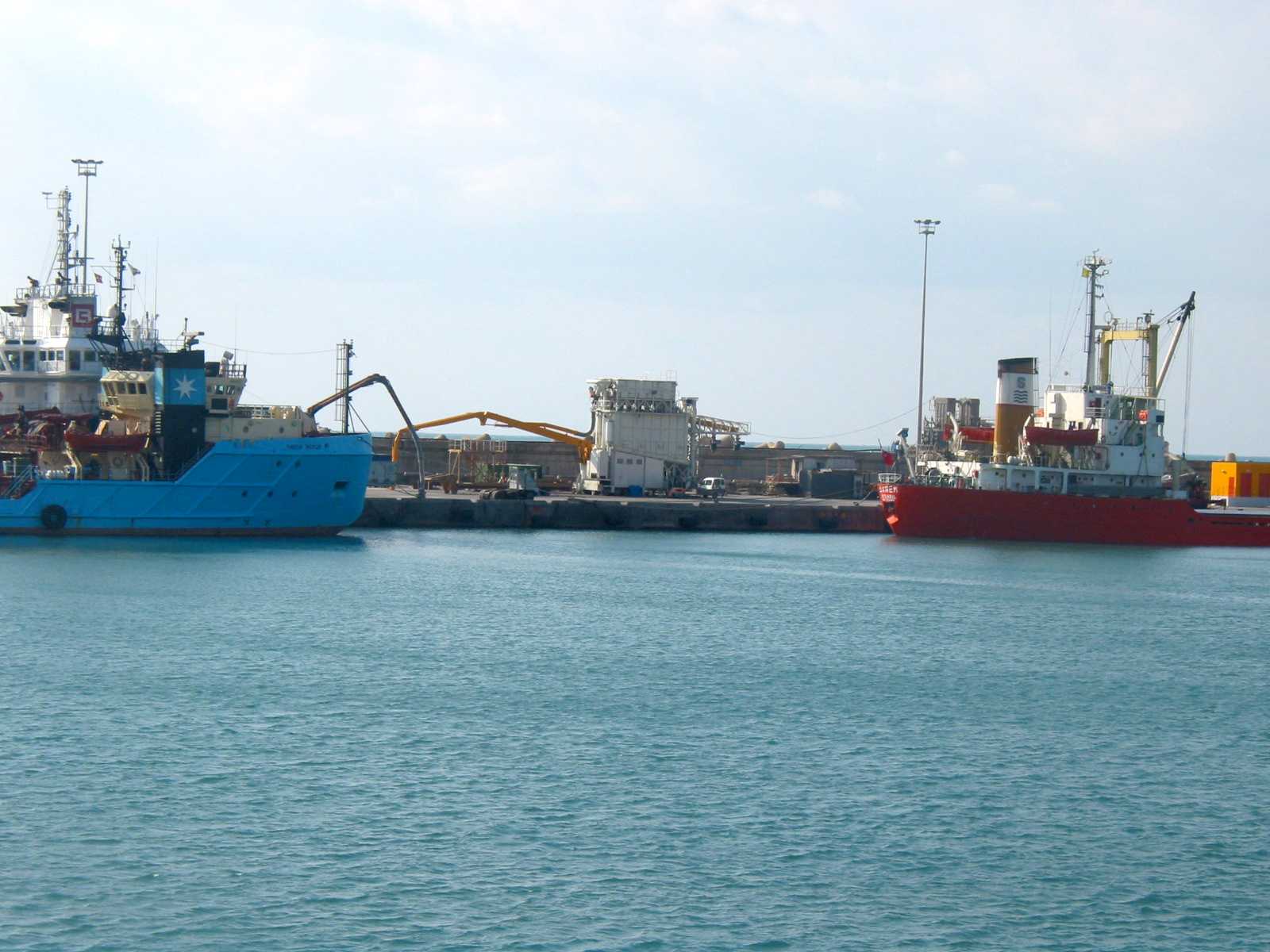
In the Ashdod Port, various methods are used for unloading bulked cement from the ship holds, including the use of the Fuller Kovaco pneumatic reloader working on the suction/ discharge principle. However, this specific Fuller Kovaco reloader is designed for bulked cement reloading from a ship hold to stationary cement storage. In the Ashdod Port environment, the construction of such storage was unfeasible due to the lack of free space. By this reason, the reloader was used for direct loading of cement to cement trucks.
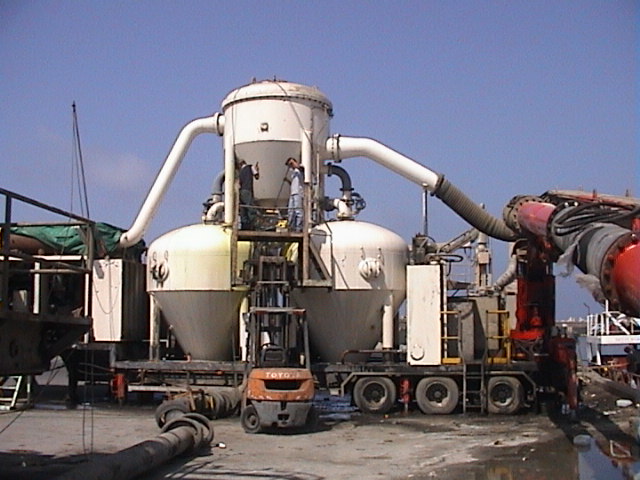
The absence of a buffer capacity (storage) forced to use the start/stop mode of reloading. This resulted in unrhythmical operation and the reduced efficiency of the reloader, the increase of ship unloading cycle, and the elevated wear of equipment. Besides, the removal of air from the air-cement mixture was hampered.
In 2002, one of the Israeli cement importers addressed Ring Projects with the request for solving the above problems.
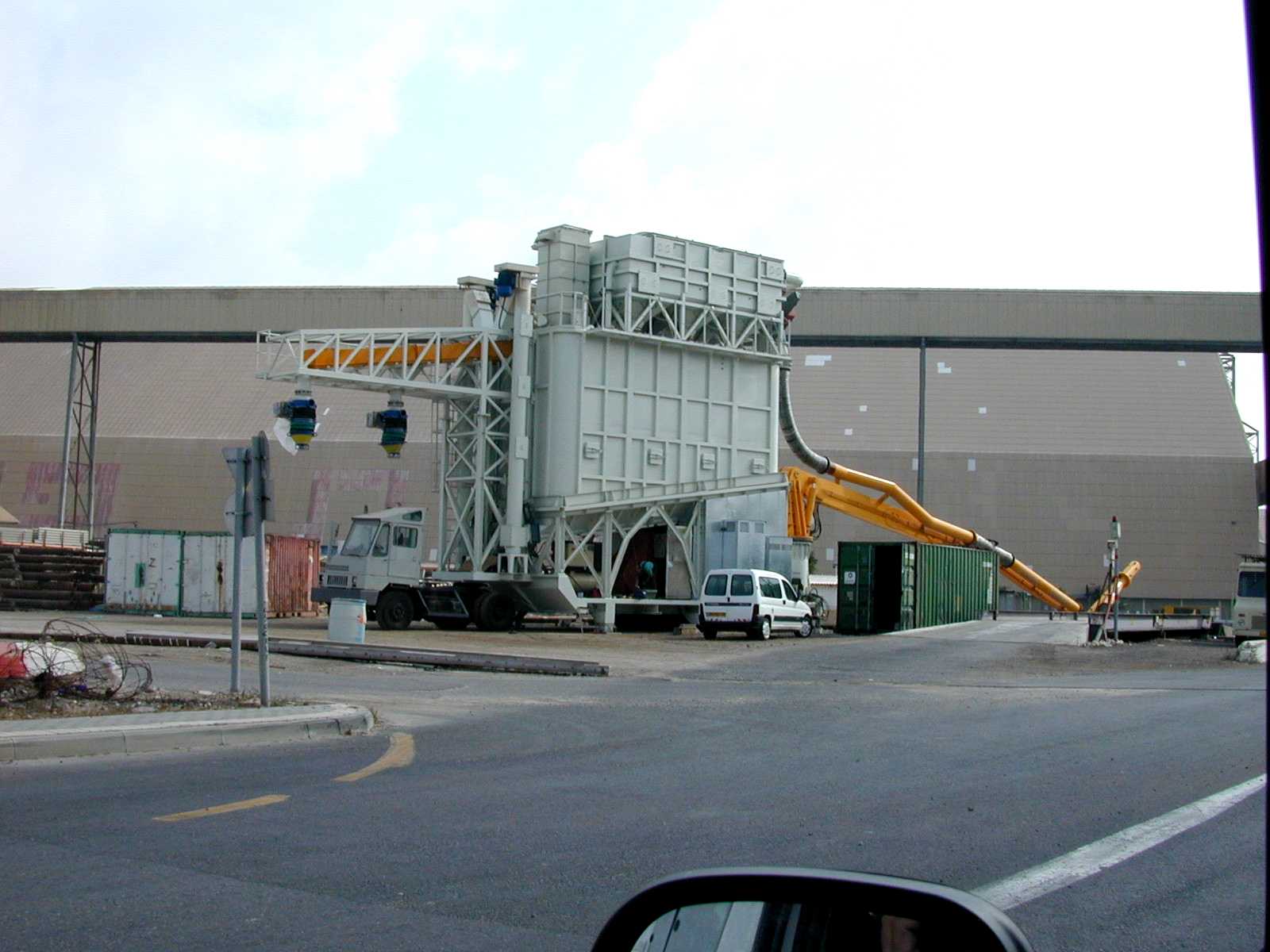
Ring Projects suggested a novel concept, designed, manufactured and carried out performance test of a mobile storage silo effectively completing the existing Fuller Kovaco reloader and allowing the uninterruptible unloading of the ship along with simultaneous loading of two cement trucks.
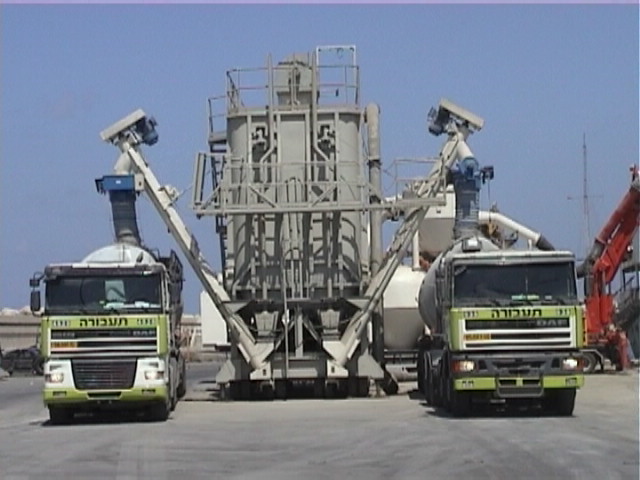
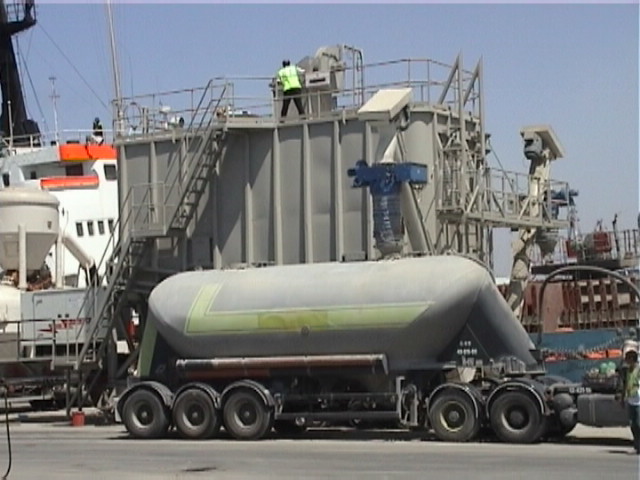
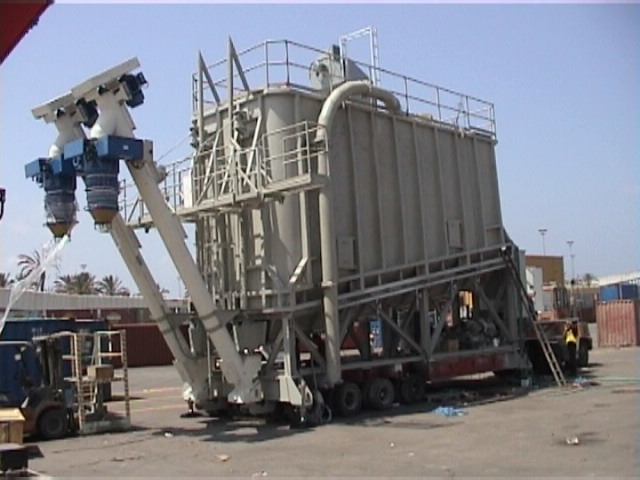
The unit consists of the following main components:
- A buffer silo with a capacity of 140 m3 mounted on a wheeled platform, which can be moved along the ship during operation and over the port territory by a truck.
- A pneumatic system used for filling the buffer silo via a flexible hose and fitted with specially designed cartridge filters separating the air from the air-cement mixture. The cleaned air is discharged into the atmosphere, and the cement is dropped into the silo.
- A novel fluidization system built in the silo bottom. The system allows uninterruptible supply of cement to the intake windows of two auger feeders mounted outside of the silo at 70° to horizontal.
- Two auger feeders, each having a capacity of 100 t/h, they may be operated ether separately, or simultaneously, filling 2 cement trucks at a time.
- The outlet of each auger feeder is equipped with a special telescopic feeding tube. The height of the tube connection to the cement truck intake throat is adjustable, thus allowing complete elimination of dusting.
- A special engine room placed directly under the buffer silo allows for the compact layout of a diesel-generator set, compressor for the fluidization of cement and cleaning of cartridge filters, hydraulic systems and hydraulic drive for the operation and control of jacks providing the stability of the unit during operation. The engine room walls are lined with sound absorbing material.
The structural strength of unit components was checked using the finite element method software. Calculations were performed for both normal operational and extreme dynamical loads.
The unit reloader has been operating successfully for 10 years.
CEMENT RELOADER
After several years of successful operation of a buffer silo, the cement importing company addressed a request to Ring Projects for designing a bulked cement reloader. The main requirements were to provide a maximum efficiency while operating in the complicated environment of the Ashdod port and a high productivity of cement truck filling.
When solving problems associated with unloading bulked cement from ships, Ring Projects developed a number of unique solutions.
In 2004, the Ring Projects Company developed and prepared a complete documentation package for a fully independent reloader capable to load two cement trucks directly from the ship hold in a non-stop mode. The availability of cement intake equipment, cleaning device, buffer silo, and distribution device in a single unit allowed to achieve a high performance and to minimize the ship unloading time.
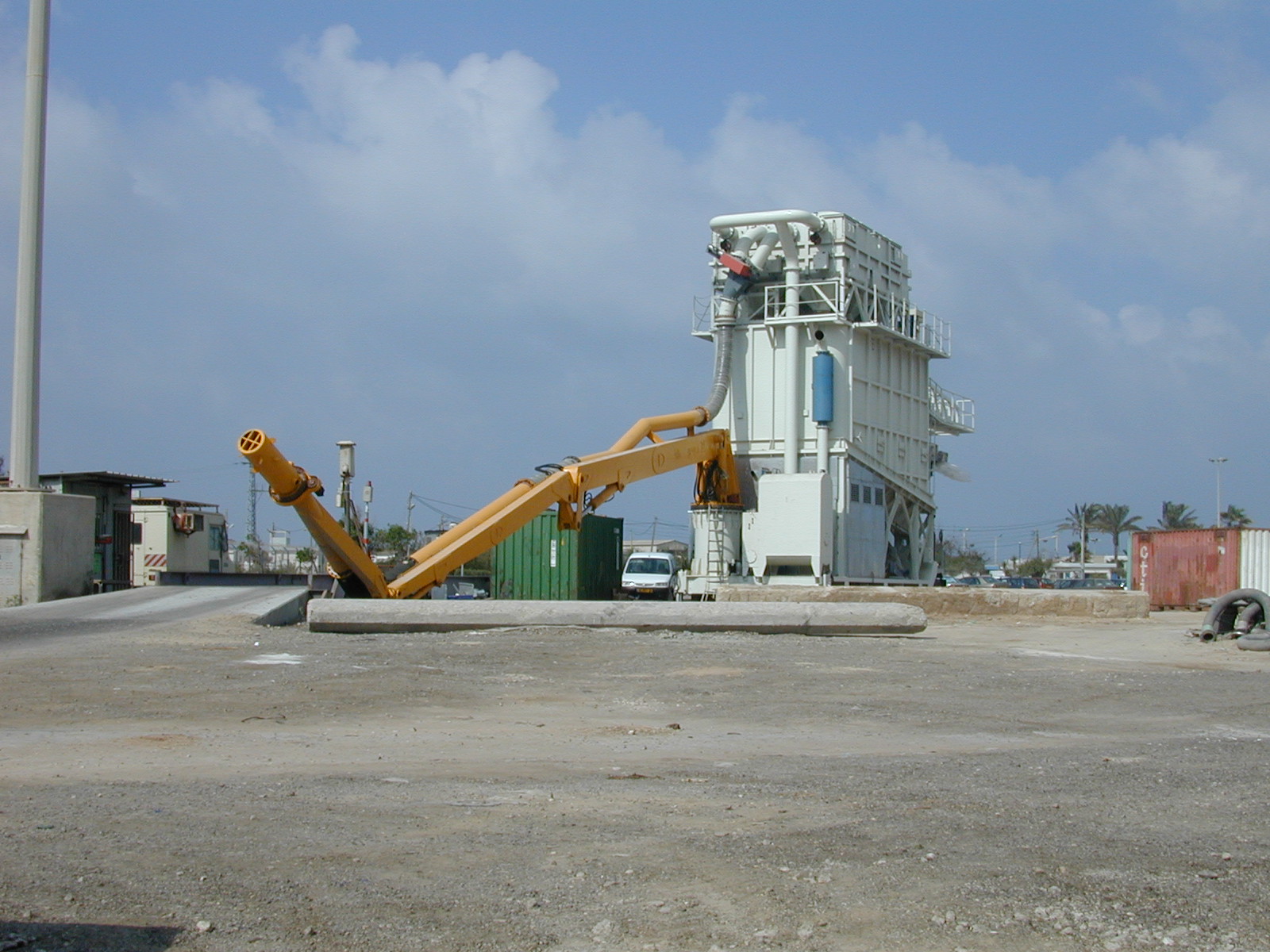
The new reloader features:
- A powerful hydraulic manipulator for introducing a flexible intake pipe fitted with a strainer into the ship hold
- A powerful pneumatic pump providing the intense supply of air-cement mixture to cartridge filters mounted on the top of the silo.
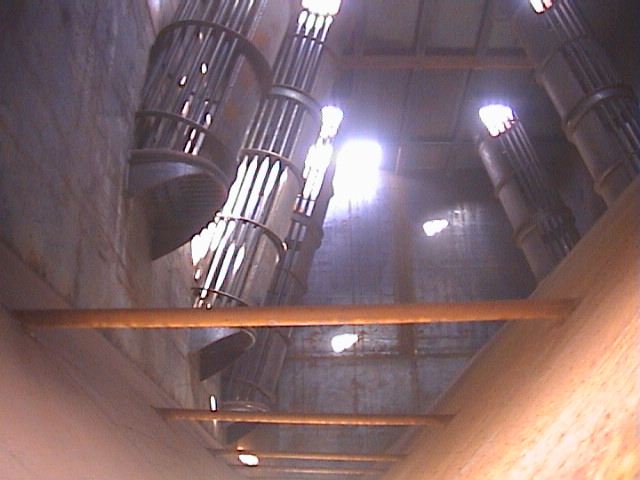
- A buffer silo fitted with special sieve for feeding the air-free cement into the inner cavity of the silo. Large unstained pieces of cement cake and other foreign inclusions are removed through special tightly closing windows.
![]()
- A unique fluidization system located in the silo bottom for the uninterrupted cement supply to the intake throat of two vertical auger feeders. The feeders placed next to the silo outer wall lift cement to the height necessary for feeding to the cement truck.
- Two horizontal fluidslides chutes supplying cement from the auger feeder outlet opening to the cement loader intake throat. Cement is fed to the receiving throats of 2 cement trucks via telescopic tubes suspended to the ends of chutes. The tubes are connected to the intake throats during loading. The unit allows loading 2 cement trucks simultaneously or separately.
- An engine room located under the buffer silo. The engine room includes a diesel-generator set, vacuum pumps, compressors, hydraulic power station, and hydraulic drive for the operation of the hydraulic manipulator and special hydraulic jacks stabilizing the unit during operation. The engine room is fitted with acoustic insulation of walls and heat and ventilation system.
The reloader is mounted on a wheeled platform and is moved along the ship during operation and over the port territory by a truck.
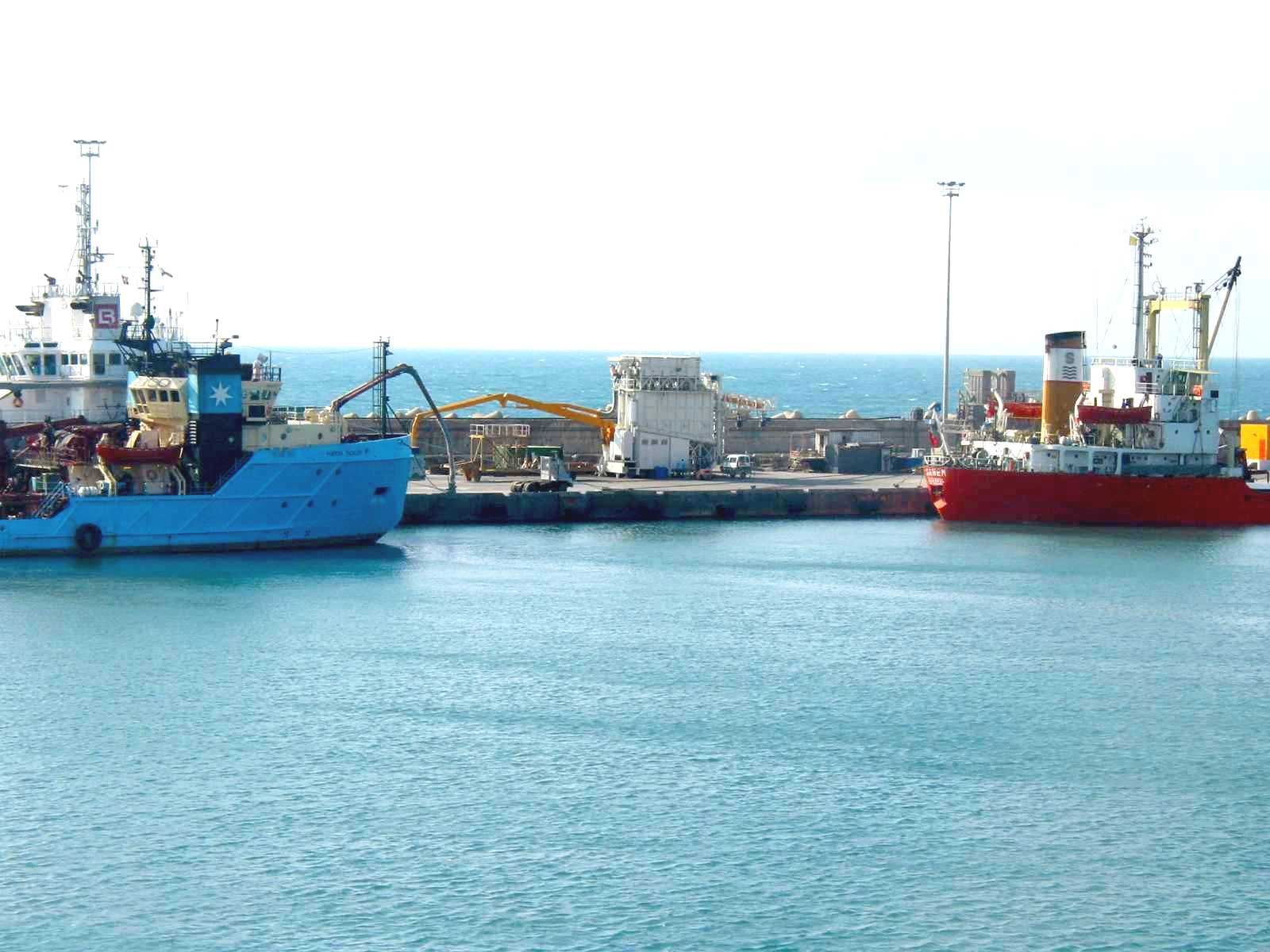
The Ring Projects reloader has been operating successfully for 8 years.