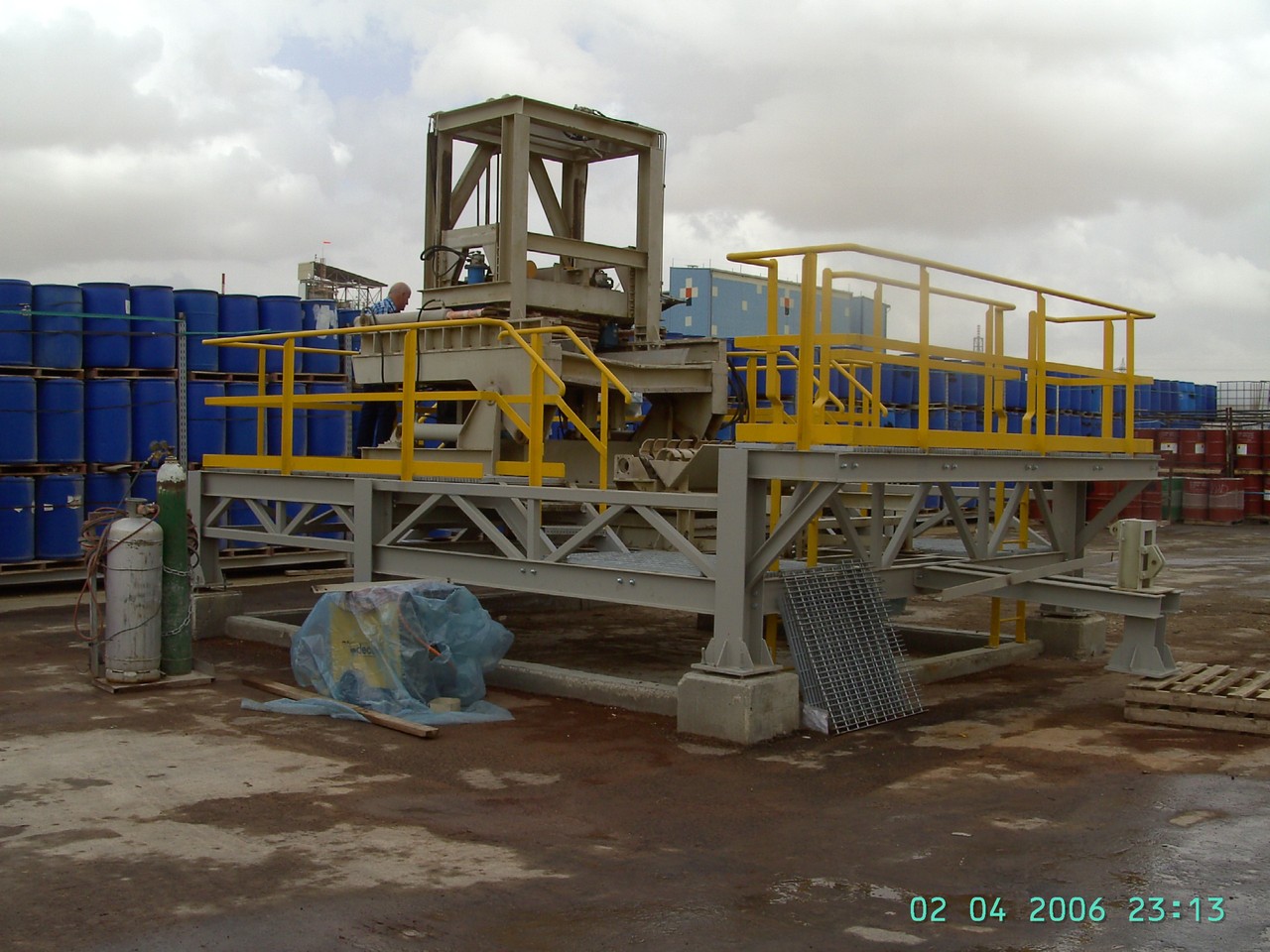
The Bromine Compounds Ltd, one of numerous Dead Sea enterprises, is located in the Ramat Hovav Industrial zone and distinguished by the fact that it produces one third of the world volume of bromine compounds. This production is characterized by a high toxicity of both main product and production wastes. For a period the enterprise has been storing wastes in sealed barrels. Due to tightening Israeli state ecological body requirements, it was decided to utilize large volumes of accumulated wastes by incineration in a specially designed reactor.
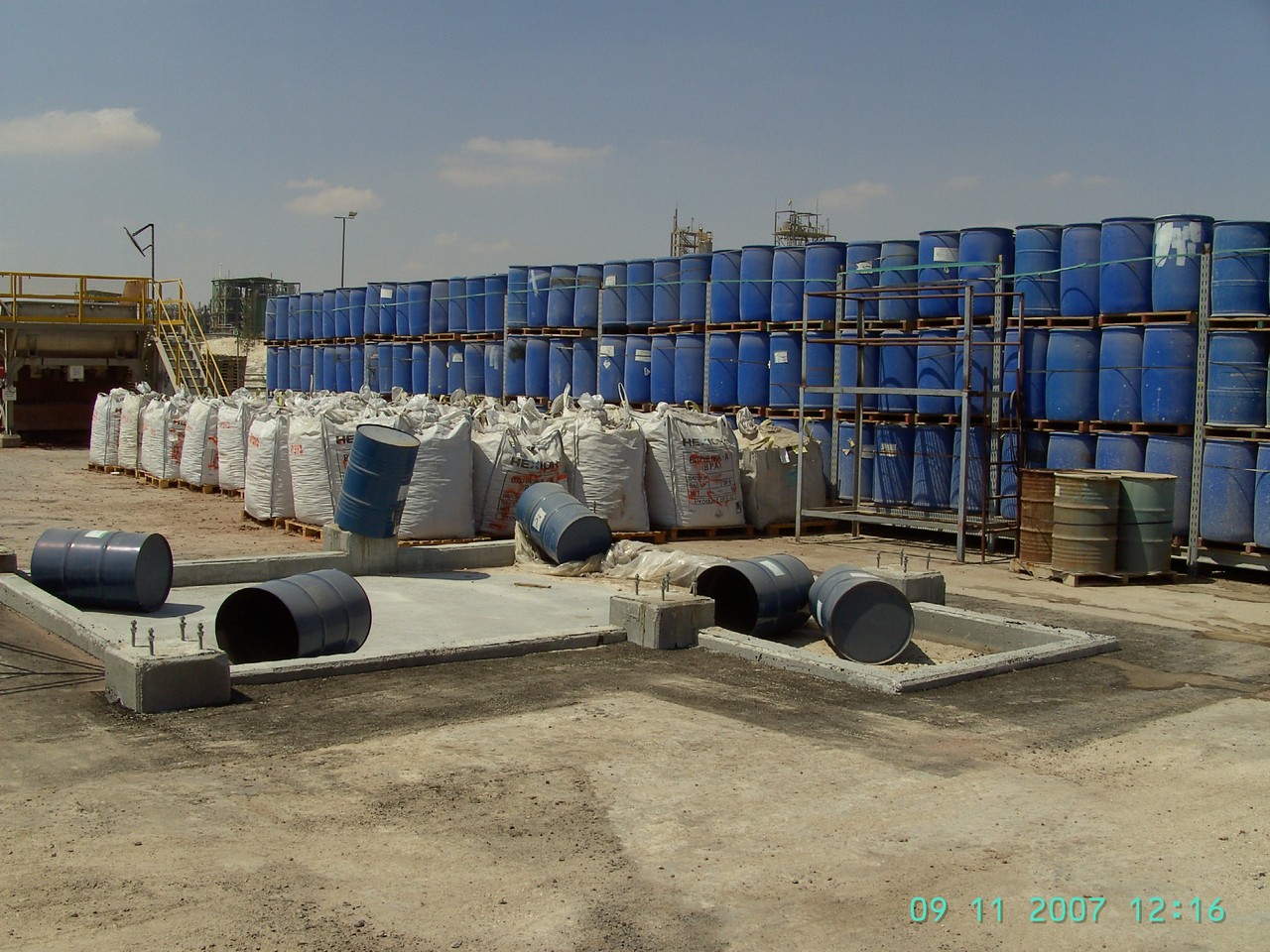
In 2006, the Bromine enterprise invited international tenders for the delivery of special equipment intended for emptying barrels and supplying the released material into the reactor.
Requirements imposed on this equipment were as follows:
-
Operation with plastic, metal-plastic, and metal barrels of various size.
-
Operation with materials whose viscosity varies from water-like to thick bitumen-like, as well as with solid (hardened) concrete.
-
Visual inspection of the opened barrel content, barrel emptying process and removing coarse fractions or foreign inclusions not to be incinerated in the reactor.
-
Removal and storage of emptied barrels in a special location (storage bin).
-
Remote control of the entire emptying process using a safely located control panel.
After reviewing and discussing all tender offers, the Council of experts decided to accept the Ring Projects Company offer for implementation.
According to the contract, the Ring Projects Co. had to design and supply equipment on the turnkey basis. The contract had to become effective only after successful tests and final painting.
The Ring Projects suggested a unique design; the detail design documentation was developed and presented to the manufacturer’s plant.
The manufacture of a prototype model and testing the operability of suggested solution was not provided for by tough contract terms. Equipment was manufactured directly in compliance with the drawings and presented to the customer.
The suggested design includes:
-
A mechanism withdrawing a barrel from the storage and delivering it to the emptying zone.
 Digital StillCamera
 Digital StillCamera
 - A unique hydraulically driven mechanism with a special box-type knife for opening barrels by cutting a square hole in the barrel cover and removing the cut piece.
 Digital StillCamera
 Digital StillCamera
 - A manipulator tilting the open barrel for emptying it in the case of liquid content.
-
If the barrel content is solid (hardened), a heavy ribbed drum goes down to the barrel. The drum can rotate about its axis and move horizontally along the barrel situated horizontally.
 Digital StillCamera
 Digital StillCamera
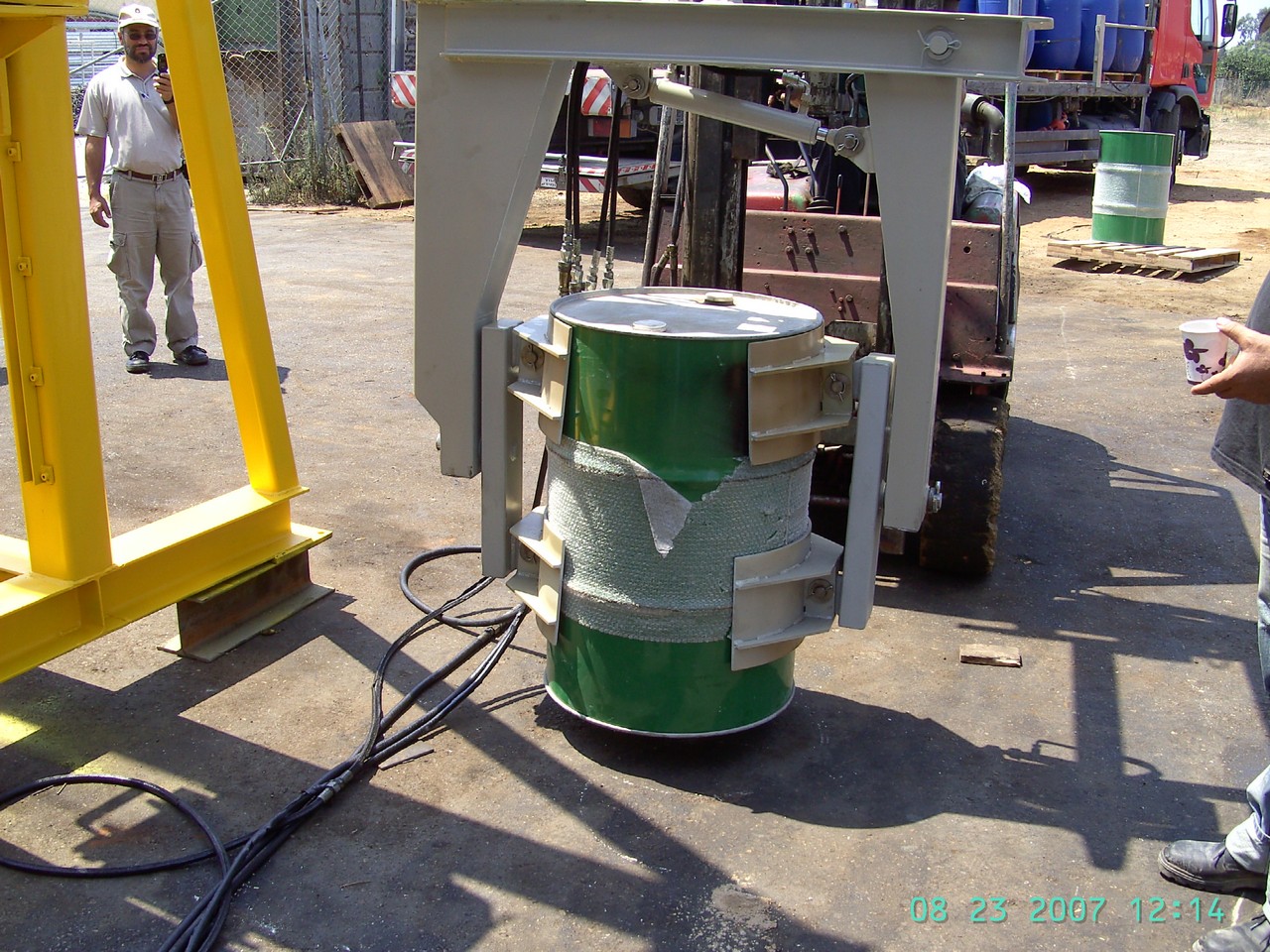
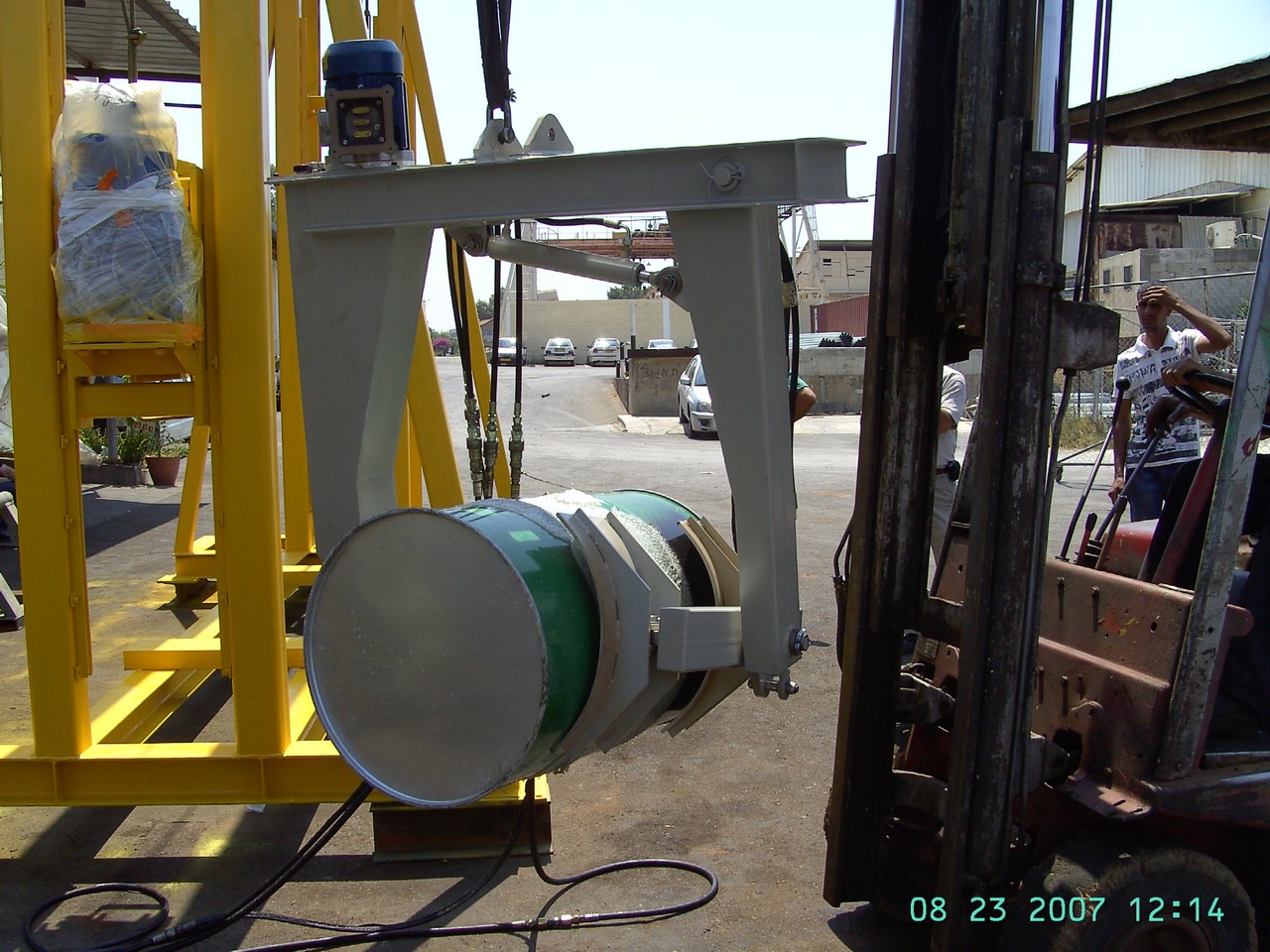
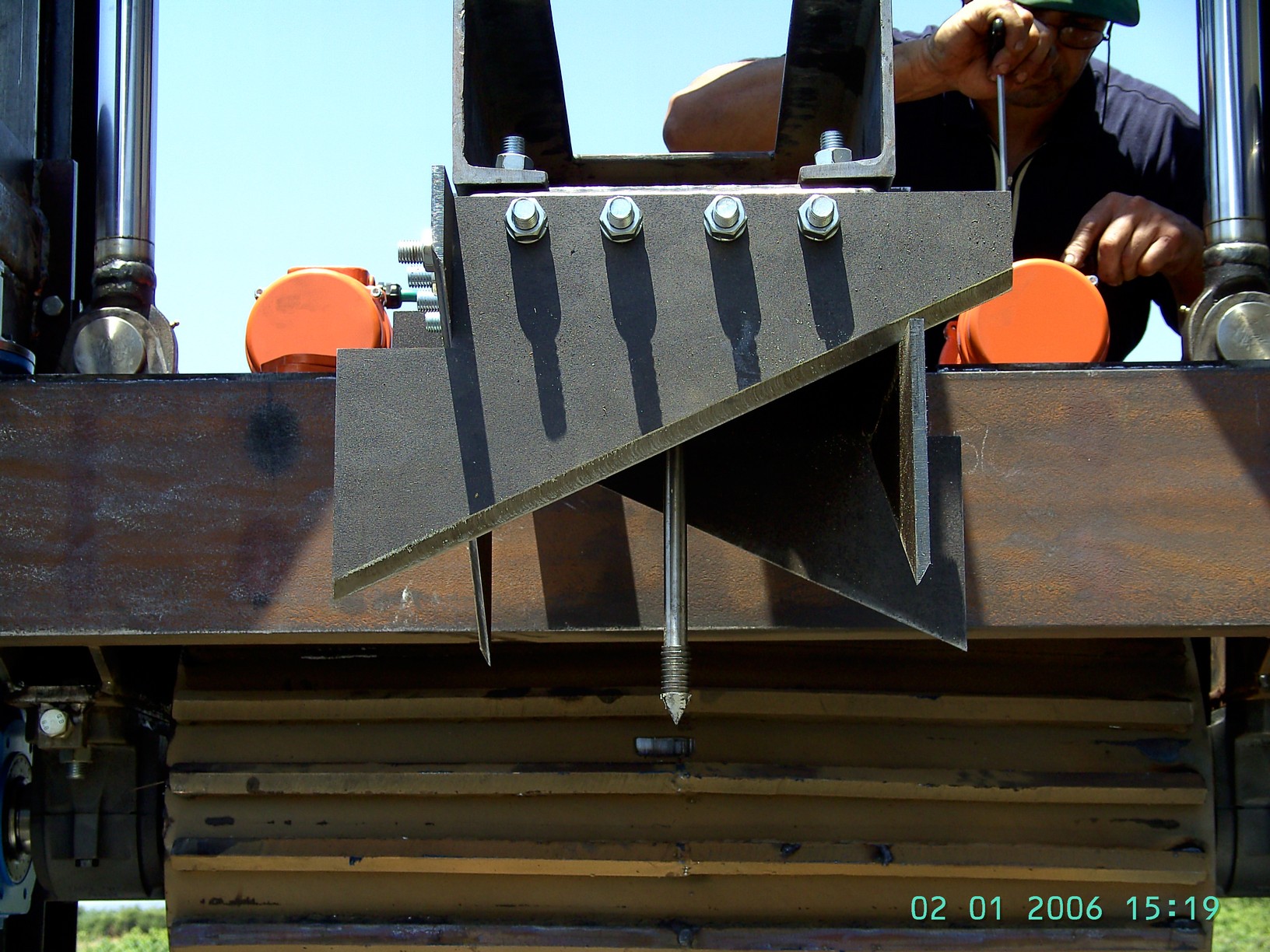
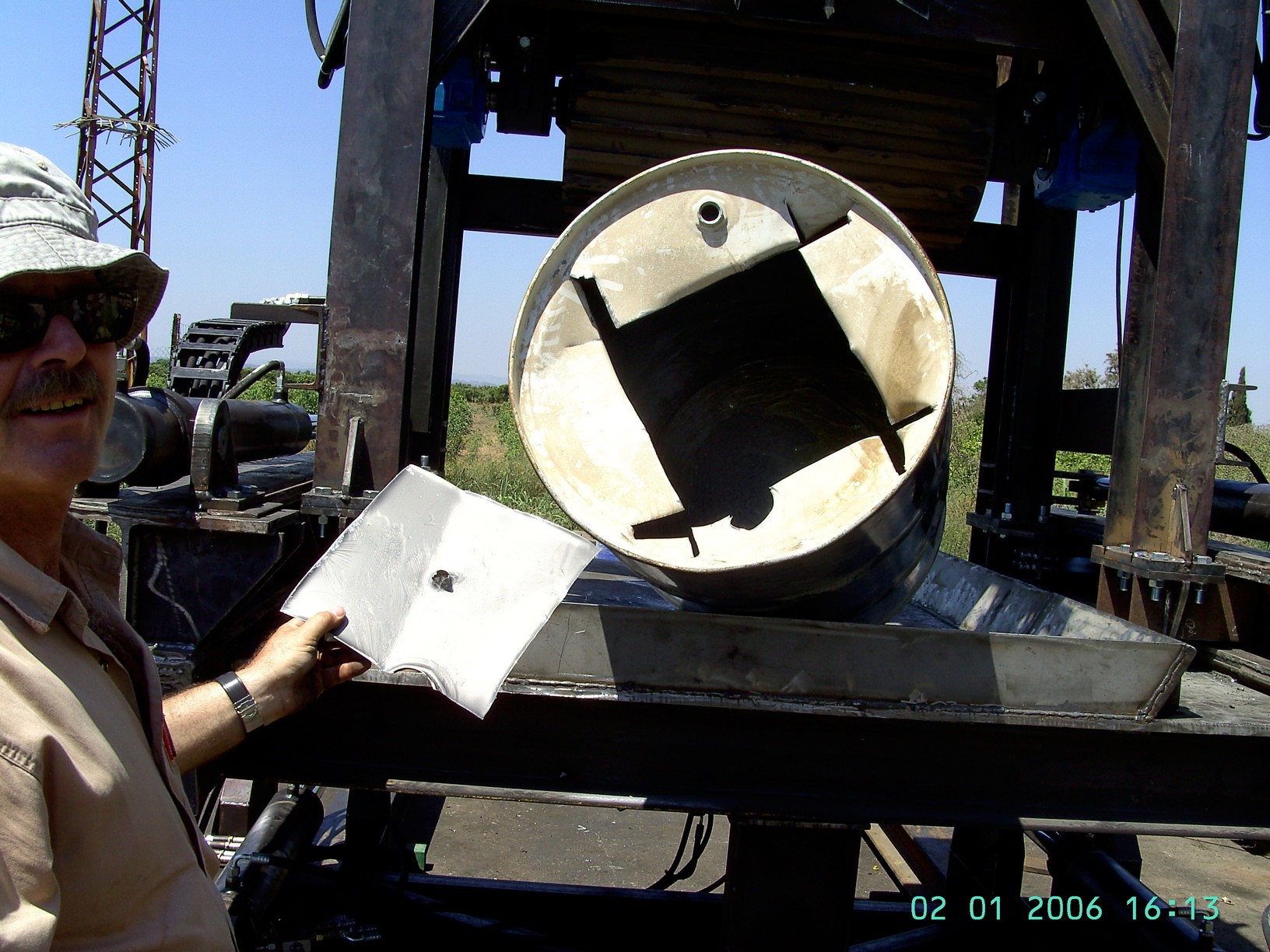
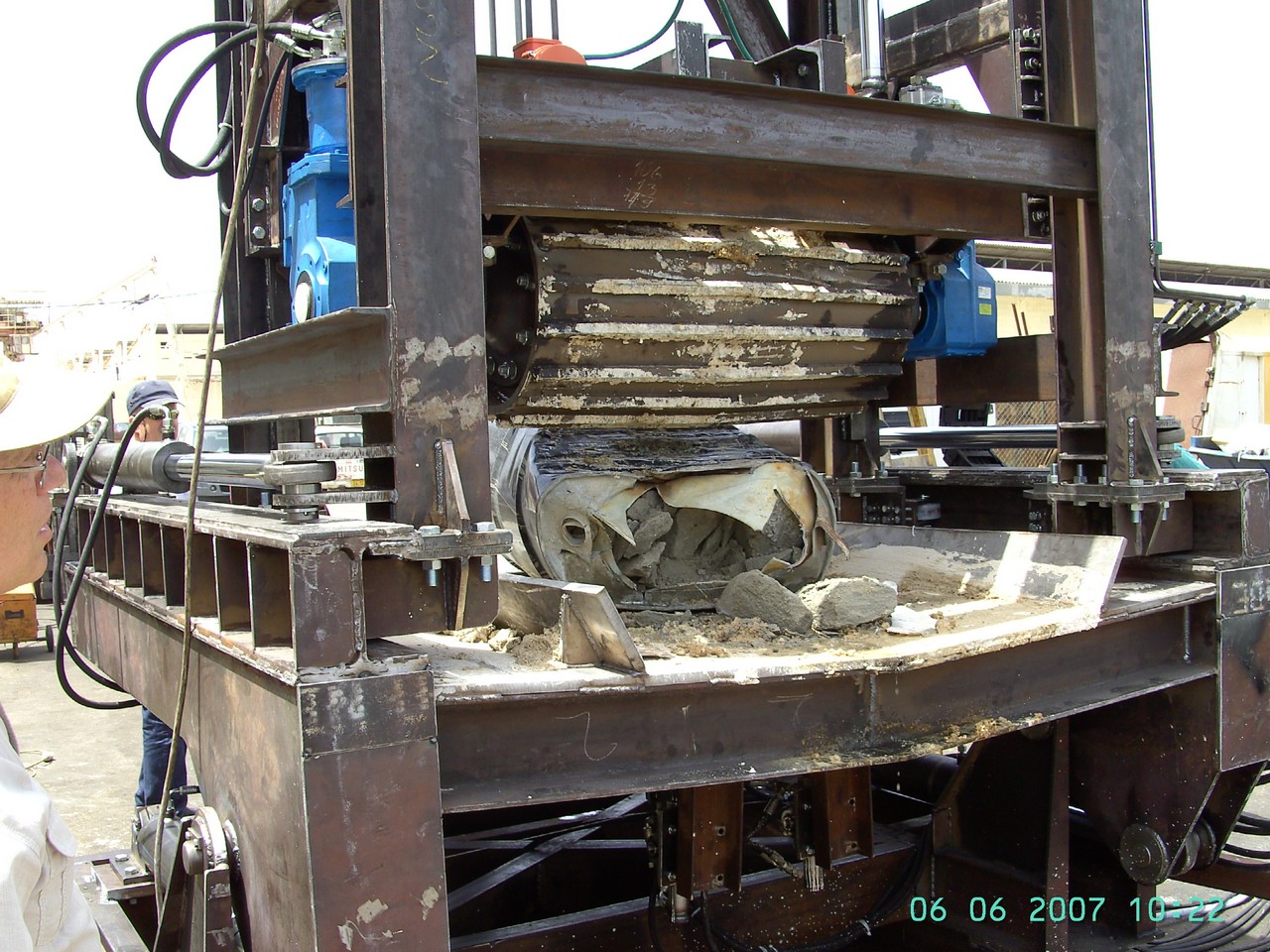
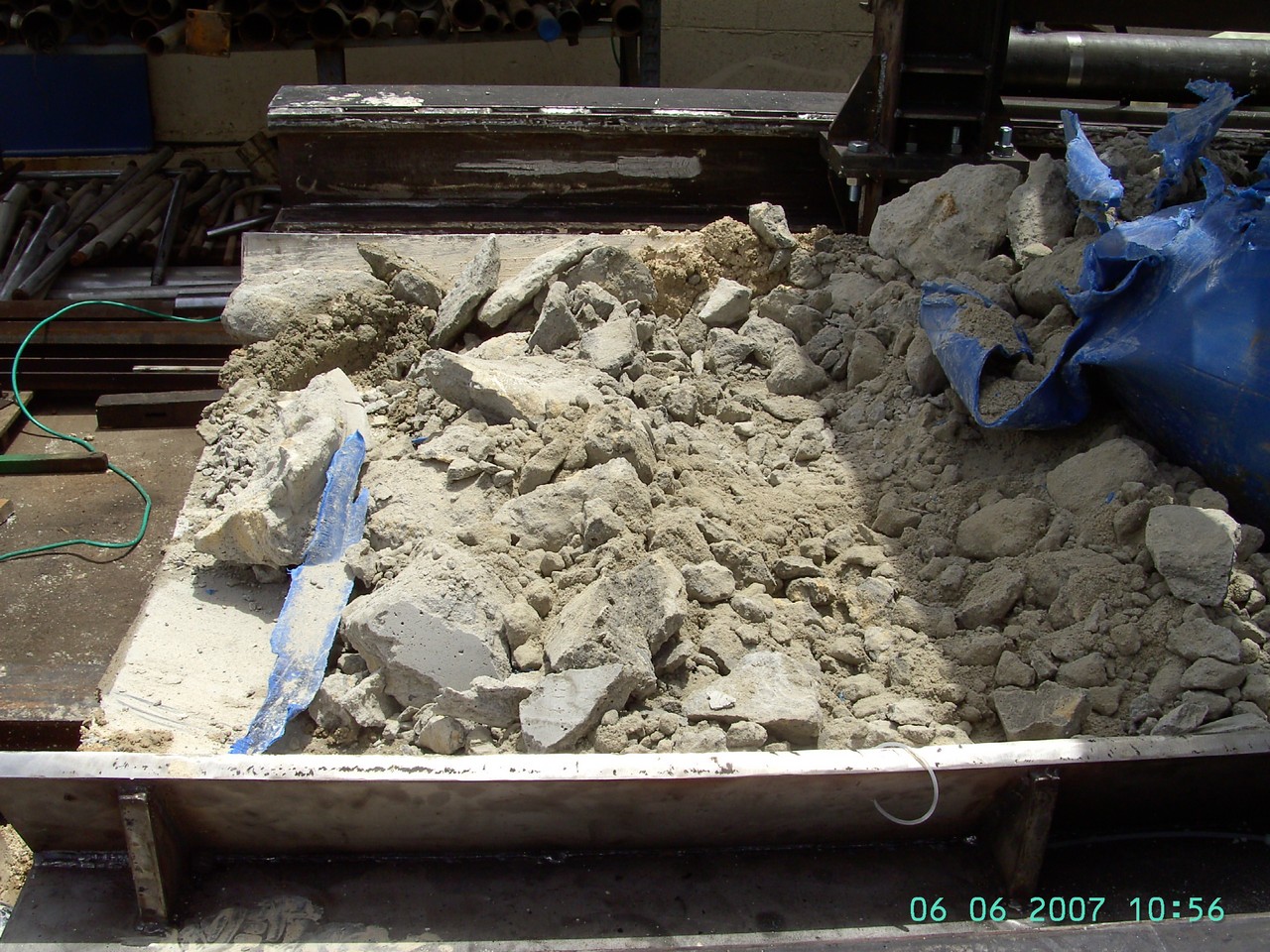
If the stone-like barrel content has to be broken, the drum can hit the barrel wall until the destruction of contained waste.
Then the drum is lowered to the barrel and rolls over it towards the open side, squeezing the content out similar to toothpaste.
Special measures ware designed to release drums that were stuck to crashing-bed by waste.
If necessary, this process is accompanied with vibration produced by special exciters.
The squeezed-out content is fed to a table rotating in the vertical plane and transferring material to an automatically sliding grid (grizzly).
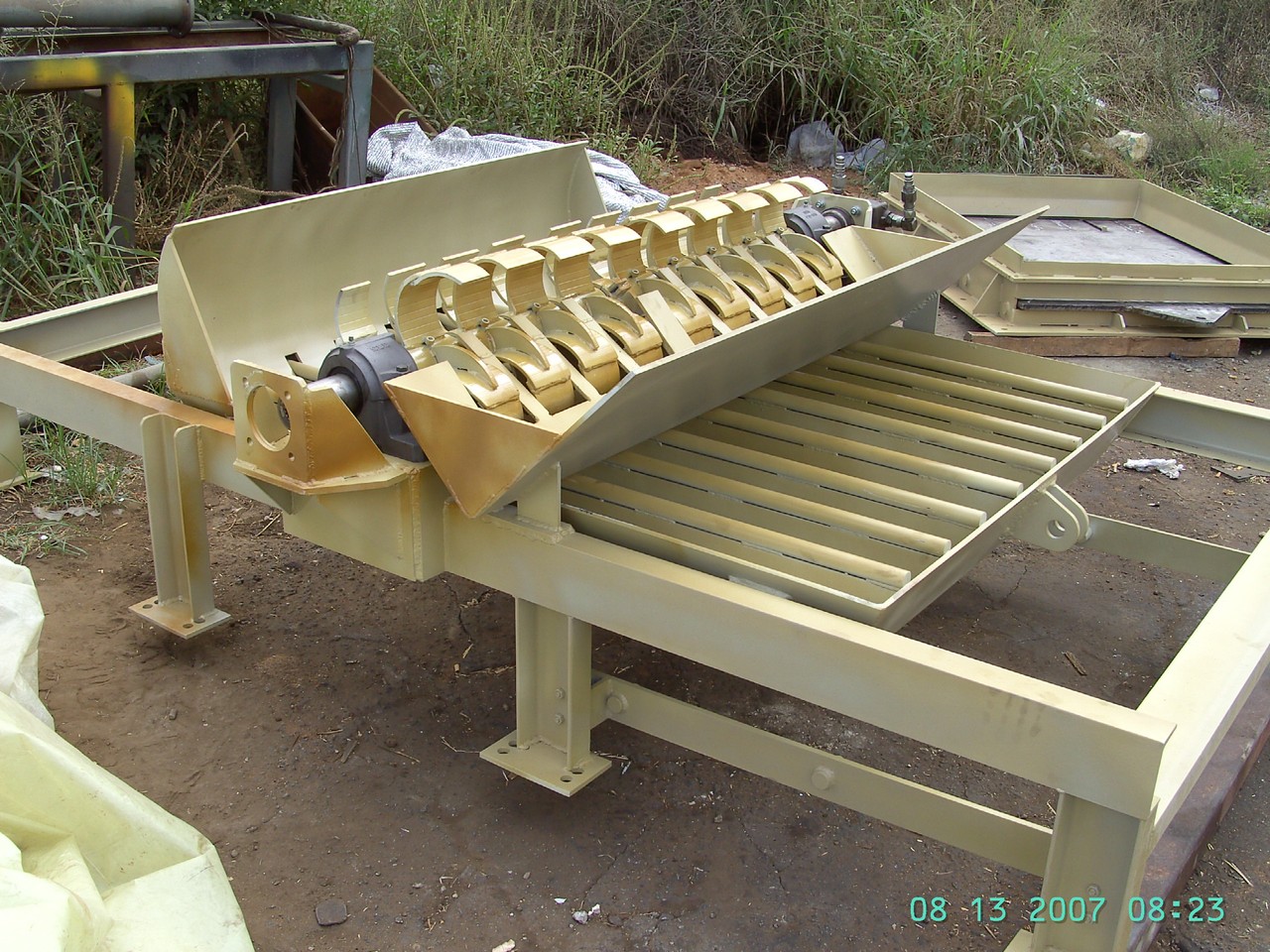
The transferred material is checked, then a damper is opened, and material falls into the reactor window. The upper fraction of the material and foreign bodies are removed from the grid by a special device into a separate container.
Emptied and flattened barrel is thrown from the table to the bin by a hydraulic pusher.
All mechanisms of the working drum, rotary table, movable grid table (grizzly), upper fraction mover and barrel pusher are equipped with hydraulic drives.
All these mechanisms are controlled remotely from a safely located glassed control room.